Task 1- Leadership & Management
a) Evaluation of the leadership and management Style at Coco-Cola using Models
John Kotter, a highly regarded authority in the field of leadership, distinguishes between leadership and management by highlighting their unique duties and functions within an organisational context. Leadership primarily entails the facilitation of change and the motivation of individuals, while management primarily emphasises the optimisation of productivity and the preservation of stability. This analysis will thoroughly investigate the two styles present at Coca-Cola Company based on John Kotter’s Leadership and Management.
Leadership Style at Coca-Cola:
The leadership approach of Coca-Cola is mostly defined by its emphasis on providing guidance to the Company through moments of change, innovation, and expansion (Rubin, 2013). The following are fundamental elements of the leadership style:
· Vision and Change
The leadership of the Coca-Cola Company is responsible for establishing a compelling vision for the firm’s future. The authors underscore the need to adapt and modify strategies to effectively respond to the ever-changing dynamics of the market, increasing consumer preferences, and the problems posed by sustainability. Influential leaders can effectively convey a well-defined vision that motivates and encourages personnel to readily accept and adapt to change.
· Inspiration and Motivation:
The leaders of the Coca-Cola effectively inspire and encourage their people by cultivating a strong sense of purpose and unwavering devotion. The organisation places significant emphasis on its contribution towards generating beneficial social and environmental outcomes and cultivating high levels of employee engagement and excitement.
· Risk-Taking and Innovation
The promotion of a culture that fosters innovation and risk-taking is actively encouraged by leadership. The individuals involved comprehend the significance of maintaining competitiveness within the beverage business and actively endorse endeavours that foster product innovation, sustainability, and market development advancements.
· Strategic Thinking
Leaders use strategic thinking to discern potential avenues for expansion and distinctiveness. The organisation places high importance on long-term sustainability initiatives and is dedicated to mitigating its environmental impact, all while ensuring continued profitability.
· Empowerment
Empowerment is the act of leaders giving workers the authority and autonomy to actively contribute their ideas and assume ownership of their respective jobs. An inclusive atmosphere is established wherever varied viewpoints are highly regarded and used to foster creativity and facilitate progress.
Management Style at Coco-Cola
Management within Coca-Cola is paramount in facilitating operational efficiency, stability, and the effective implementation of daily operational responsibilities. The following are essential elements of the management style:
· Operational Efficiency
Operational efficiency is a crucial area of management attention aimed at maximising the effectiveness of processes and resources to achieve optimal production and distribution of Coca-Cola products. The organisation effectively applies optimal strategies in supply chain management, production, and logistics (Idris & Mohd Ali, 2008).
· Budgeting & Control
Managers are responsible for planning and implementing cost management methods to achieve predetermined financial objectives. The individuals in question oversee and track key performance indicators (KPIs) while ensuring that operational activities follow predetermined budgets.
· Quality Assurance
Quality assurance is a critical aspect of management’s focus, prioritising product quality and adherence to safety regulations. Quality control methods are used in order to adhere to regulatory standards and guarantee user satisfaction.
· Hierarchy & Structure
The Company adheres to a hierarchical framework in which managers possess well-defined roles and duties. Organisations have established well-defined reporting lines and organisational structures to facilitate efficient coordination and communication.
· Resources allocations
Resource allocation is a crucial managerial function that involves distributing resources, such as human resources and money, across different departments and projects. Resource allocation is given priority depending on the specific demands and goals of the organisation.
· Stakeholder Relations:
Management actively cultivates and sustains connections with diverse stakeholders, including suppliers, distributors, and retailers. Their primary objective is to guarantee the efficient functioning of the supply chain and distribution network.
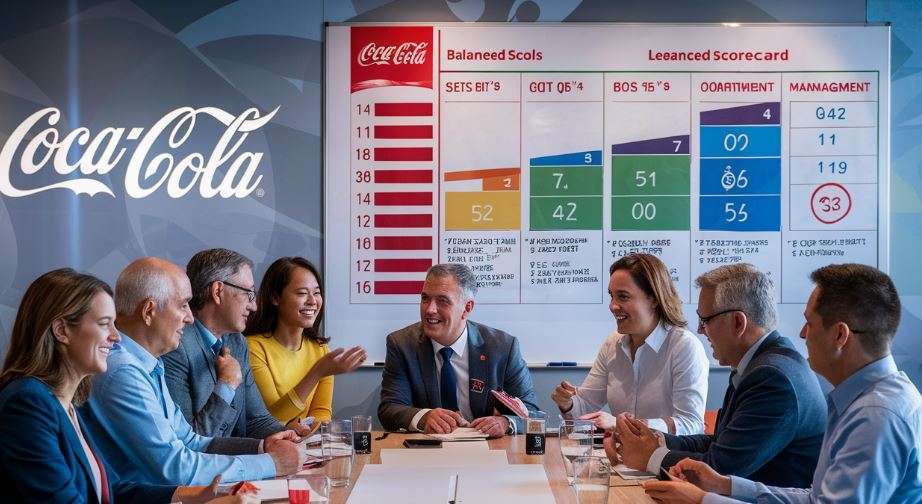
Balancing Leadership and Management Style:
Coco-Cola UK acknowledges the significance of achieving a harmonious equilibrium between leadership and management. Leadership is crucial in establishing the strategic direction and fostering transformative change inside an organisation. On the other hand, management is responsible for ensuring the seamless and efficient execution of day-to-day operations (Ritter et al., 2004). The firm’s success is contingent upon efficiently integrating both types.
· Collaboration
Collaboration entails a tight partnership between leaders and managers to align strategic objectives with operational implementation. This process guarantees that the organisation’s overarching vision is effectively transformed into concrete goals and tangible outcomes.
· Adaptability
Coca-Cola recognises the need to be flexible and responsive within an industry characterised by swift and constant transformations. Leaders are crucial in guiding organisations through transformative processes, whilst managers are responsible for effectively implementing changes.
· Employee Development:
Cultivating employee skills and abilities is a shared priority for both leadership and management, as it contributes to establishing a work environment that promotes ongoing improvement and the generation of innovative ideas. This encompasses leadership development initiatives and managerial training to augment their leadership proficiencies.
b) Comparison of Coco Cola Leadership style with competitors and issues for the ‘s future development
The leadership style used by Coca-Cola :
Coca-Cola is respected for its forward-thinking management, which has helped the earn a reputation for excellence in the beverage industry. This dedication includes tackling environmental and social issues as well. Leadership places a premium on transformation to respond to altering customer tastes and market trends by proactively investing in R&D for brand-new goods and cutting-edge packaging. Customers, vendors, and neighbourhoods all play critical roles in these ongoing conversations on stakeholder involvement. Coco-Cola places a premium on sustainability. Therefore, it works with others to solve pressing problems facing society and the planet. Furthermore, the corporation promotes diversity and inclusiveness, cultivating a culture that appreciates different points of view (Blackhurst * et al., 2005).
The leadership style used by PepsiCo UK
On the other side, the leadership of PepsiCo UK is known for emphasising the importance of listening to and meeting the demands of its customers. This strategy is backed by a portfolio that includes drinks, snacks, and nutritional goods, demonstrating a commitment to innovation and diversity. PepsiCo UK shares the Coca-Cola ‘s dedication to sustainability, notably in the areas of minimising harm to the environment and protecting precious water supplies. They have defined sustainability objectives, which include measures to reduce plastic waste. PepsiCo UK uses a global perspective by drawing on knowledge and assets from other parts of the world to inform its marketing strategy (Ashkanasy & Daus, 2002).
Comparison and Potential Issues for Future Development
· Sustainability Leadership
The ability of people or organisations to successfully advise and promote sustainable practises and activities is what is meant by the term “sustainability leadership.” (Cetin et al., 2016).
- Coca-Cola Company has shown a proactive approach towards tackling environmental sustainability. Nevertheless, the corporation may encounter obstacles in attaining its ambitious sustainability objectives, particularly in reducing single-use plastic trash, which has garnered noteworthy public and regulatory scrutiny.
- PepsiCo UK has a significant emphasis on sustainability as well. However, their portfolio’s more comprehensive range of products may provide them more prospects for attaining sustainability objectives across many categories.
· Product diversification
Product diversification refers to the strategic approach businesses use to expand their product offerings to mitigate risks and capitalise on new market opportunities (Cetin et al., 2016).
- Coco-Cola Company primarily emphasises the production and distribution of drinks, which may result in a more restricted scope for diversification compared to PepsiCo UK. The latter Company boasts a broader array of offerings, including beverages, snacks, and nutrition-related goods.
- PepsiCo UK’s diversification strategy enhances its resilience against market volatility within specific product categories. However, this approach requires proficient management of many product lines.
· Consumer Preferences:
This section focuses on the preferences of consumers in relation to various products or services. It explores the factors that influence consumer decision-making and their choices.
- Coco-Cola Company has the challenge of aligning with shifting customer tastes and decreasing the sugar level in their products.
- PepsiCo UK places emphasis on providing healthier options and snacks, which is in accordance with prevailing customer preferences for healthy lives.
c) Ability to handle significant business challenges by Coco-Cola
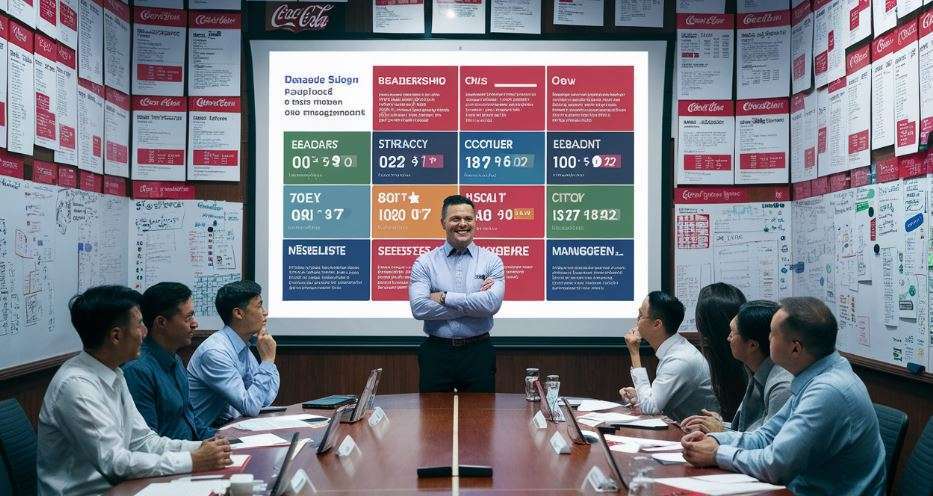
Comprehensive assessment of Coca-Cola Company’s capacity to effectively manage the prospective challenges for future advancement already alluded to, in a more intricate manner:
Sustainability Leadership:
The ability to steer and propel sustainable practises and projects is what we mean when we talk about “sustainability leadership”..
· Strengths (Coco-Cola Company):
Coca-Cola Company has shown outstanding dedication to sustainability. The Company has established explicit sustainability objectives, including a target of reducing carbon emissions by 25% by 2025. Additionally, they have made notable progress in mitigating the environmental impact of their goods by implementing packaging advancements and adopting energy-efficient production practices(Cetin et al., 2016)..
· Critical Evaluation:
Pursuing and advancing sustainability objectives, particularly about mitigating single-use plastics, present formidable challenges despite commendable intentions and achievements. Coco-Cola Company works within a context where the issue of plastic waste and its associated environmental consequences is becoming prominent. To maintain their trajectory, they must intensify their endeavours in discovering viable alternatives for sustainable packaging and actively engage in recycling projects. Achieving sustainability objectives is a corporate obligation and a crucial need for businesses.
Product diversification
Product diversification is a business strategy that involves broadening a company’s product offerings in order to lower risk and take advantage of a wider variety of market prospects..
· Strengths (Coco-Cola Company):
Coco-Cola Company demonstrates notable strengths via its strategic expansion of product offerings within the beverage category, including a diverse range of alternatives such as low-sugar and no-sugar variants like Coca-Cola Zero Sugar and Diet Coke. This exemplifies a proactive attitude towards accommodating evolving customer tastes towards healthier alternatives.
· Critical Evaluation:
Although implementing diversification strategies in the beverage industry is commendable, it may only partially be adequate for long-term sustainability. PepsiCo UK and other competitors have diversified their product offerings to include snacks and nutrition goods, offering customers a more extensive selection of options. Coca-Cola Company must consider investigating prospects for diversifying into associated sectors or engaging in strategic alliances with other firms to provide supplementary merchandise. This will aid in the resolution of dynamic customer preferences and facilitate the generation of additional income sources.
· Strengths (Coco-Cola Company):
One of the notable strengths of the Coca-Cola Company is its ability to demonstrate versatility in addressing customer preferences for low-sugar and no-sugar drinks. The Company has implemented reformulated goods and launched marketing efforts that emphasise the availability of healthier alternatives(Cetin et al., 2016)..
· Critical Evaluation:
Consumer preferences exhibit a dynamic and varied nature, warranting critical evaluation. There is a growing trend among health-conscious individuals to prioritise reduced sugar content and the use of natural ingredients, sustainable practices, and transparent sourcing and manufacturing processes in their product choices. Coco-Cola Company must monitor and proactively anticipate these developments to effectively adjust its product range and marketing initiatives. Furthermore, customers place a growing significance on the sustainability and ethical sourcing aspects of goods. This underscores the need for supply chains to adopt transparent and responsible procedures.
Task 2- Leadership for performance
a) Balance Scorecard for Coco-Cola
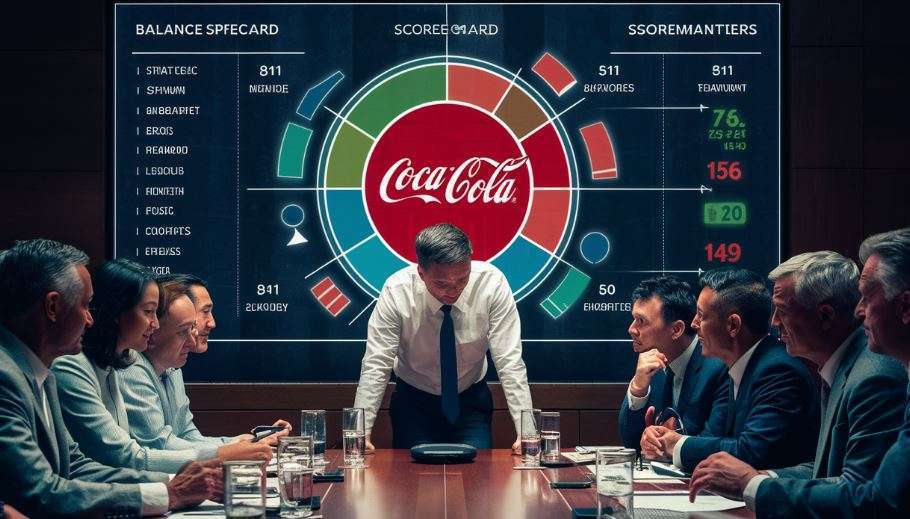
Strategic management tool the Balanced Scorecard examines an organization’s performance from four perspectives: Financial, Customer, Internal Processes, and Learning and development (Kaplan, 2009). The Coca-Cola Company’s Balanced Scorecard provides a complete view of its performance and direction. It is vital to acknowledge that the formulation of particular objectives and key performance indicators (KPIs) needs customisation following the organisation’s distinctive circumstances, aims, and obstacles. Regular evaluations and revisions of the scorecard are important to guarantee its ongoing pertinence and congruence with the Company’s dynamic strategic direction (Ashkanasy & Daus, 2002).Presented below is a hypothetical Balanced Scorecard model designed for the Coca-Cola Company:
· Financial perspective.
Strategic objectives.
- Enhance the generation of income via the introduction of new items.
- Enhance the profitability of the organisation through increasing profit margins.
- Maximise the value for shareholders.
Key Performance Indicators (KPIs)
- The rise in revenue from one year to the next.
- Gross and net profit margins.
- Return on Investment (ROI)
- Earnings Per Share (EPS)
· Customer Perspective
Strategic objectives.
- Improve client satisfaction.
- Enhance customer loyalty towards a particular brand.
- Increase the market share in crucial categories.
Key Performance Indicators (KPIs):
- The measurement of customer satisfaction levels.
- The distribution of market share within specific sectors of the market.
- The metric of customer retention
· The perspective of internal processes
Strategic objectives.
- Optimise manufacturing procedures to enhance efficiency and productivity.
- Minimise trash generation and enhance sustainability.
- Improve the efficiency of distribution.
- Enhance and expand the range of product offerings via innovation.
Key Performance Indicators (KPIs):
- The duration required for the completion of production tasks.
- The quantification of waste reduction in terms of percentage.
- The proportion of revenue allocated to distribution expenditures.
- The quantity of newly introduced products.
· The Learning and Growth Perspective
Strategic objective
- Enhance and develop the skills and competencies of employees.
- Promote the development of an innovative culture.
- Enhance employee happiness and improve staff retention.
- Improve technical capacities.
Key Performance Indicators (KPIs):
- The proportion of workers engaged in training activities.
- The scores measure employee satisfaction.
- The phenomenon of employee turnover rate.
- The allocation of funds towards technology and research and development (R&D)
b) Leadership for performance approach
The “Leadership for Performance” method places significant emphasis on leadership’s pivotal role in enhancing organisational performance. The statement acknowledges that leaders can substantially impact the attainment of strategic goals by virtue of their actions, behaviours, and choices. This paper provides a comprehensive analysis of the use of “Leadership for Performance” methodologies in attaining the strategic goals outlined in the Balanced Scorecard framework for the Coca-Cola Company.
· Financial Perspective
From a financial standpoint, it is evident that the executives at Coca-Cola Company can substantially impact revenue generation, particularly in the introduction of novel product offerings. Organisations may effectively address the evolving demands of expanding markets by cultivating an environment conducive to innovative thinking and making prudent allocations of resources towards research and development. Moreover, profit margins may be augmented by implementing strategic cost-efficiency measures, engaging in more effective negotiations with suppliers, and adopting optimal pricing strategies. Maximising shareholder value is also crucial. The attainment of this objective may be facilitated via effective communication of a well-defined vision and plan by leaders, instilling stakeholders with a sense of assurance about the organisation’s trajectory. Consistent involvement and openness in communication with shareholders may enhance and reinforce this sense of trust (D’Innocenzo et al., 2016).
The customer’s perspective highlights the significant impact of leadership on the whole brand experience. The prioritisation of client-centricity guarantees that choices are made with a primary focus on the customer’s best interests. By implementing frequent feedback channels, executives can get valuable insights into the requirements of their customers and then take timely action to satisfy those demands. Brand loyalty is a fundamental aspect of consumer brands, which can be strengthened by executives who advocate for a consistent brand message and surpass customer expectations (Friedkin & Slater, 1994). To enhance their market presence inside targeted categories, organisational executives must discern potential development avenues and customise marketing and sales tactics appropriately.
· Internal Processes Perspective
The internal processes viewpoint shows that leadership may improve organisational efficiency and effectiveness. Executives can optimise production processes by advocating for approaches such as Lean or Six Sigma by identifying and addressing inefficiencies. Sustainability, a progressively significant facet of contemporary Companies, necessitates executives to establish explicit objectives and spearhead activities aimed at waste reduction. The optimisation of distribution routes is a responsibility that comes under the purview of leadership, as they collaborate with logistics teams to enhance distribution efficiency. Product innovation is a domain in which effective leadership may significantly impact. Leaders may maintain a competitive advantage in the market by cultivating a climate of innovation and allocating the necessary resources (D’Innocenzo et al., 2016).
· Learning & Growth Perspective
The Learning and Growth Perspective emphasises the link between human resource development and leadership. Leadership may emphasise the need for ongoing learning, providing various opportunities for people to enhance their skills and competencies. Leaders can foster a culture of innovation by eliminating obstacles to innovative thinking and promoting collaborative efforts, creating an environment where novel ideas are embraced and incentivised. Enhancing employee happiness and retention is crucial for the sustained prosperity of a business (Friedkin & Slater, 1994). This may be achieved by effective leadership practices, such as active team engagement, acknowledgement of high-performing individuals, and providing avenues for professional progress. In the contemporary era of digital advancements, the augmentation of technical capacities is equally vital. Leaders who actively keep informed about technological changes and make strategic investments in state-of-the-art equipment may effectively maintain their firm’s competitiveness within the market.
c) Evaluation of Key Financial Statements of 2022 of Coco Cola
· Revenue Analysis:
The financial performance of Coca-Cola in the year 2022 shows a solid upward trend in terms of revenues. The Company’s financial report indicated a notable increase of 7% in net sales for the quarter, resulting in a total of $10.1 billion. The net revenues notably increased 11% every year, reaching $43.0 billion. After adjusting for non-GAAP factors, organic sales had a more favourable outlook, with a 15% increase for the quarter and a 16% rise for the year. The Company’s revenue has seen a steady increase over both quarterly and yearly periods, highlighting the effectiveness of its sales techniques, strong market presence, and successful price moves that consumers have received well.
· Operating margins
An analysis of the operating margins was conducted, revealing a positive trend based on the quarterly numbers. The operating margin for the quarter saw an increase of 20.5%, indicating a positive change compared to the previous year’s figure of 17.7%. After adjusting for non-GAAP measures, the operating margin was 22.7%, which was marginally higher than the previous year’s margin of 22.1%. Nevertheless, the yearly data showed a little decline, as the operating margin decreased from 26.7% in the previous year to 25.4%. The performance drop might be attributed to many factors, including acquisitions such as BODYARMOR, increased operational expenses, intensified marketing spending, and the difficulties arising from currency changes.
· The analysis of Earnings Per Share (EPS)
The earnings per share (EPS) numbers exhibited positive and negative outcomes for investors and stakeholders. The quarter’s earnings per share (EPS) decreased by 16%, reaching a value of $0.47. Nevertheless, after adjusting for non-GAAP factors, the earnings per share (EPS) that may be compared exhibited stability at $0.45. The earnings per share (EPS) had a 3% decrease, totalling $2.19, every year, whilst the corresponding EPS exhibited a 7% increase, reaching $2.48. When compared to the increase in comparable EPS, the decrease in earnings per share (EPS) suggests possible difficulties in maintaining profitability or increasing the number of shares available despite the continued presence of underlying operational strengths.
· Market Share Analysis:
In terms of competition, Coca-Cola has strengthened its market position. The firm had positive results in the overall nonalcoholic ready-to-drink beverage sector for the quarter and the fiscal year. The growth trajectory of Coca-Cola included both domestic and international distribution channels, highlighting the effectiveness of their product offerings and methods that consistently appeal to customers.
· Cash flow patterns
The annual cash flow from activities amounted to $11.0 billion, indicating a decrease of 13%. After making adjustments for non-GAAP indicators, the annual free cash flow was disclosed as $9.5 billion, signifying a decline of 15%. The operational and accessible cash flow decrease might be ascribed to increased expenditures or a possible decrease in input. This fall may have been influenced by several factors, including deliberate inventory buildups reacting to unpredictable commodity environments, the cycling of working capital advantages from the previous year, and increased tax and incentive payments in 2022.
Task 3- Ethical Leadership
a) Evaluate the most ethical issue that Coca-Cola faces.
Let’s elaborate on the moral dilemma that Coca-Cola faces because of their water use in the UK and provide more specifics on the solutions we propose.
- Water Scarcity
Coca-Cola has come under fire for their water use policies, especially in arid countries. Concerns regarding the depletion of local water supplies have been sparked by the Company’s massive groundwater withdrawals in these locations (Brown et al., 2005). The environment and local economies might suffer as a result of these activities. Furthermore, there have been claims that Coca-Cola bottling factories have contaminated nearby water supplies with toxic chemicals and garbage. The problem is made worse because it takes a lot of water to produce bottled drinks, particularly water. Using plastic bottles significantly increases human interference with the natural world. Large firms like Coca-Cola must constantly evaluate and improve their environmental effect, particularly regarding water resources, despite the Company’s attempts to address these problems.:
b) Recommendations for Managing the Ethical Issue
· Water Stewardship:
Coca-Cola should prioritise water conservation with aggressive replenishment objectives. The corporation must restore water supplies at a pace equivalent to or higher than their depletion. The replenishment plan also supports local water conservation programmes. These efforts may be improved by working with local governments and organisations.
· Transparency:
Coca-Cola must disclose its environmental effect, particularly on water resources. Publicating thorough information on water consumption, conservation, and other environmental measures may accomplish this. To develop trust and credibility, stakeholders, including conservation organisations, local communities, and consumers, should be engaged to provide input (Mayer et al., 2012).
· Community Engagement:
It is essential to engage with local communities. Coca-Cola can promote cooperation and understanding by incorporating people in water management planning. The firm may also educate communities on water conservation and sustainable water practices to enable them to protect their local water supplies.
With its resources, Coca-Cola could invest in eco-friendly bottling plant technology. The firm may cut water usage without sacrificing product quality by using water recycling, reuse systems, and modern filtration technology.
· Collaborating
Collaborating with other industry participants may promote sustainable water practices in the beverage business. Pooling knowledge and resources creates more effective and broad solutions. Partnering with environmental and water conservation NGOs may also influence legislation and collective action.
· Research & Innovation:
Coca-Cola should invest in water-efficient manufacturing processes. Innovative methods that decrease water use and environmental effects may help the firm develop.
· Public Responsibility:
To maintain responsibility and confidence, Coca-Cola should conduct independent audits to evaluate and certify water consumption and sustainability practices. By doing so, the organisation can fulfil its goals and stay transparent (Mendonca, 2009).